

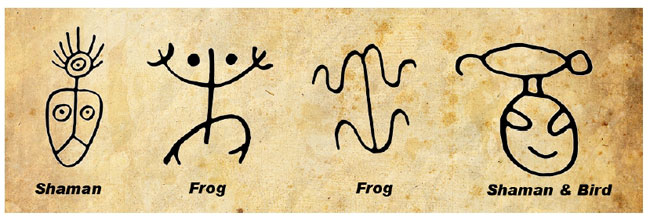
Contemporary researchers continue to investigate these enigmatic rock carvings, though the interpretation of Taíno and pre-Taíno petroglyphs remains one of archaeology's most compelling mysteries. Recent discoveries at sites like Reef Bay on St. John have strengthened the connection between these carvings and Native American peoples, while advanced archaeological techniques are providing new insights into their cultural significance.
Modern archaeological analysis has moved beyond simple speculation to employ sophisticated methodologies including comparative iconographic studies, contextual site analysis, and integration with broader Caribbean cultural patterns. Recent excavations have revealed impressive petroglyph walls featuring matched pairs of full-length human figures wearing headdresses and ear spools, with arms outstretched and legs positioned in frog-like stances.


Current interpretations suggest these symbols represent a complex spiritual cosmology. The famous petroglyphs of Atabey, the Taíno mother goddess of fertility and fresh water, are consistently depicted with the head and body of a woman but the legs of a frog. Common motifs include spirals, faces, suns, coquí frogs, and abstract figures that once served as sacred expressions of spirituality and storytelling. These petroglyphs, particularly those found at ceremonial plazas like Cagüana in Utuado, Puerto Rico, represent different Taíno deities known as cemíes.

Dating petroglyphs remains one of archaeology's greatest challenges, as traditional carbon-dating methods cannot be applied directly to rock surfaces. However, recent breakthroughs have provided unprecedented insights into their age and cultural context.
In 2022, archaeologists achieved a major milestone by dating pre-Hispanic Puerto Rican rock art for the first time, focusing on thousands of images found in caves on Mona Island, which served as a spiritual hub for Taíno culture. Archaeological evidence suggests many of these petroglyphs date to shortly before the arrival of the Spanish in the fifteenth century, though the full chronological range extends much further back.
Archaeological sites like El Atajadizo in the Dominican Republic contain ceramics, flint, coral, and stone tools dating back to approximately 300 BCE, suggesting a much longer tradition of symbolic expression. The earliest inhabitants of Puerto Rico included pre-agricultural peoples during the Archaic period, characterized by semi-nomadic living in small bands with frequent use of caves for shelter and burials. While the exact dating of individual petroglyphs remains complex, the cultural tradition spans from approximately 2000 BCE to 1500 CE, representing over three millennia of indigenous artistic expression.
The question of meaning has evolved significantly with recent archaeological discoveries and improved understanding of Taíno cosmology and social organization.
Unlike Egyptian hieroglyphics, which function as a systematic written language, Taíno petroglyphs operated within an oral tradition and served multiple cultural functions. The Taíno people did not possess a written language in the conventional sense, yet their symbolic system was remarkably sophisticated and deeply meaningful.

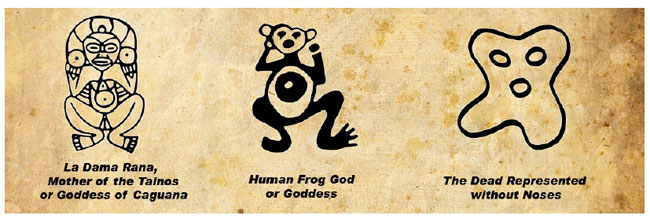
Contemporary archaeological interpretation combines multiple analytical approaches. Recent noninvasive analysis of Taíno artifacts, including cemí idols, has revealed complex internal structures that enhance our understanding of their spiritual significance. Rather than relying solely on intuitive interpretation, modern researchers employ comparative iconographic studies, contextual site analysis, and integration with ethnohistorical accounts from early Spanish chroniclers.
Current theories encompass several interconnected functions: shamanic vision recording, territorial marking, astronomical observation, ceremonial instruction, and mythological narrative preservation. Evidence suggests these symbols were used by spiritual leaders to make rain and obtain appropriate direction on community needs, with evolving imagery reflecting the development of chiefly lineages. The petroglyphs likely served as permanent records of spiritual journeys, community histories, and sacred knowledge that was essential for maintaining cultural continuity across generations.
The Taíno showed particular preference for creating these carvings on rocks near rivers or in caves, suggesting a deep connection between the symbols and sacred landscapes. This positioning indicates that the petroglyphs were integral to specific ceremonial sites and ritual practices, rather than casual artistic expression.




The TainoAge Project website started well over a decade ago. Back in 2007 I began to upload rock-carving/symbol findings to this site.