
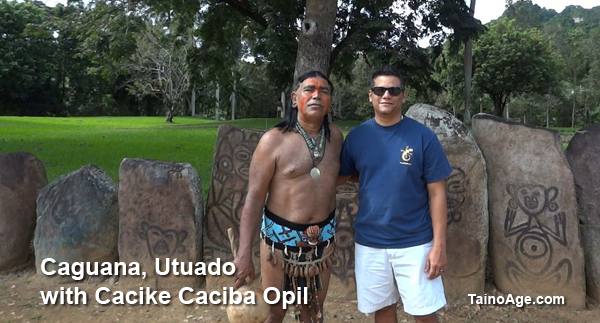
I am Sammy Fontanez, and TainoAge represents an ongoing research initiative that originated from a personal investigation into the petroglyphs of Puerto Rico in 1997. My initial understanding of these archaeological artifacts was limited, which subsequently motivated an extensive quest for knowledge and deeper comprehension.
These ancient symbols, or rock carvings, created by the indigenous inhabitants of Boriken, are held in profound reverence by many island residents. These motifs are ubiquitously displayed in souvenir establishments, apparel, automotive decals, and local artisan exhibitions.
While the general population may interpret these symbols as representations of the coqui frog, el sol de Jayuya, and other cultural elements, the meanings attributed to these complex mystical symbols by both islanders and archaeologists have been subject to both acceptance and scholarly debate over time.

Nevertheless, these symbols contain significantly more depth and complexity than previously understood, with substantial research potential remaining. Each carving possesses profound meaning that transcends simple indigenous markings or conventional "rock art" classifications. In time, these symbols may reveal ancient knowledge or potentially contain prophetic information regarding future climatic phenomena.
The information and research presented on TainoAge encompasses a comprehensive range of sources, from conquistador chronicles to contemporary scientific data. The scope includes rock carvings, symbolic interpretations, ceramic pottery designs, as well as pre-Columbian cosmology, mythology, spirituality, and religious practices.
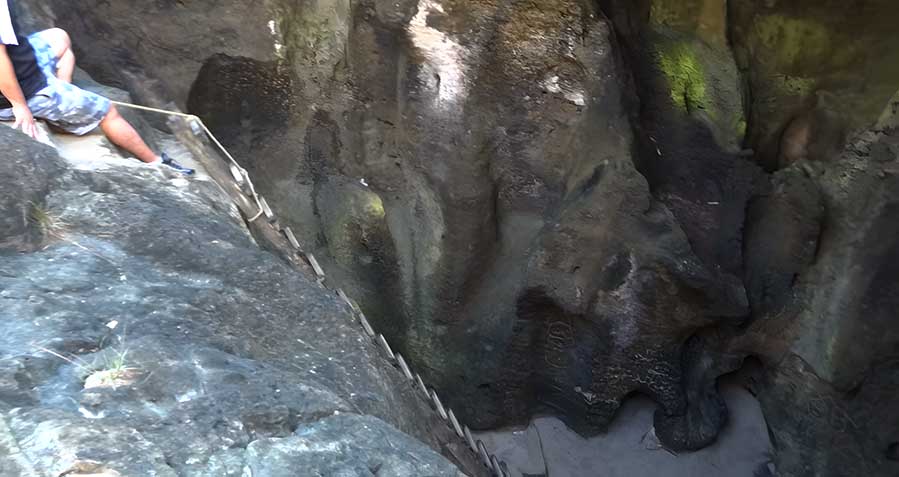
I have conducted extensive fieldwork throughout Puerto Rico, documenting ancient petroglyphs created by the Taino ancestors. This research has required traversing challenging terrain, including mountain hiking, rock climbing, and river crossings to access remote locations that are both hazardous and aesthetically remarkable. In these elevated environments, surrounded by tropical rainforest and accompanied by the distinctive sounds of the coqui, I have documented extraordinary rock art and explored the sacred heritage of the Taino people.

Many of these ancient images have been preserved through photographs, video recordings, and illustrations that I have collected and produced throughout my research tenure, serving as a permanent repository of my findings. I recognize that each petroglyph represents a unique cultural expression, and I maintain profound respect for the rich civilization that created these remarkable artifacts.

My research interests extend beyond the petroglyphs of the Caribbean to encompass broader studies of indigenous rock art. During my visit to Petroglyph National Monument in New Mexico, I had the opportunity to examine one of North America's most significant petroglyph sites.
The monument contains thousands of petroglyphs created by Native American peoples, offering valuable insights into pre-Columbian artistic traditions. Of particular interest is the evidence of cultural layering, where Spanish settlers added Christian crosses to the existing rock art between 400-700 years ago, creating a unique palimpsest of religious and cultural expression.
These petroglyphs, dating from 1300 to 1600 AD, are carved into dark volcanic basalt along the edge of a low mesa on Albuquerque's northwestern boundary. This site represents an important opportunity to advance comparative studies of ancient rock art traditions across diverse cultural contexts.



The TainoAge Project website started well over a decade ago. Back in 2007 I began to upload rock-carving/symbol findings to this site.