
Grab your fine tip markers or crayons as this Coquí coloring page has lots of intricate “tropical plants” designs. Fun for all kids, school students and adults alike.
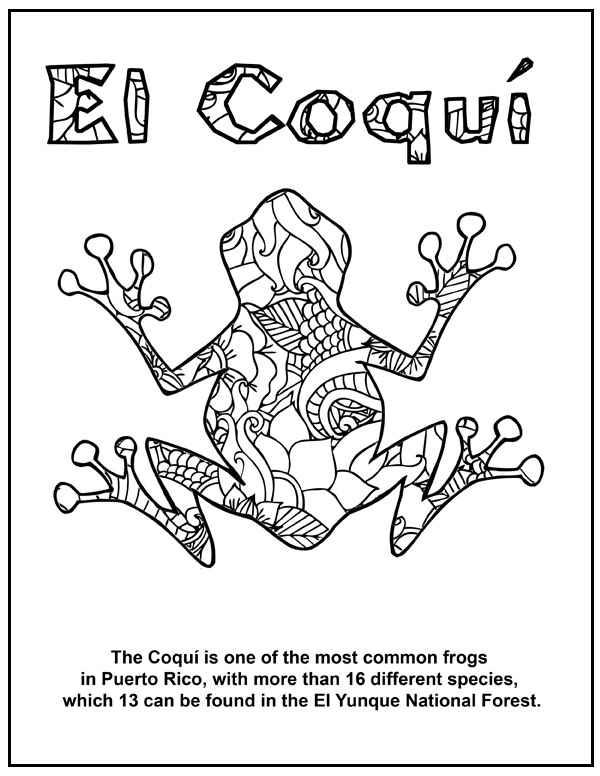
To download this free printable coloring book page, just click on this download link. The file format is in PDF and can be printed from any inkjet or laser printer.
The Coquí is a small tree frog that varies in color, though it represents one of the largest frog species found in Puerto Rico's forests. Puerto Rican coquis are one to two inches (2.5 to 5 centimeters) long and weigh two to four ounces (57 to 113 grams), with adults ranging from 24 to 55 mm, where females are larger than males and elevation affects size—the higher the elevation, the larger the individual.
These frogs can be brown, yellow, green, and gray on the top, with the underneath side of their bellies being either white or yellow. The coqui frog has brown to gray coloring and differs from other native frog species in the presence of toe discs for climbing. Their eye color can also vary from gold to brown.
The scientific classification places them in the genus Eleutherodactylus, which is Ancient Greek for "free toes," as this species does not have webbing between its toes. The genus Eleutherodactylus encompasses some 200 species and dominates the Caribbean region, with fossil evidence suggesting coquis have been present on Puerto Rico for more than 29 million years, with molecular phylogenies estimating the genus diverged approximately 57 million years ago.
The coquí's most distinctive feature is the loud call males make at night, which serves two purposes: the "co" serves to repel other males and establish territory while the "quí" serves to attract females. This call has made the coquí a very important aspect of Puerto Rican culture, becoming an unofficial symbol.
What makes the coquí particularly remarkable is its reproductive strategy. Development proceeds from larval form to froglet within the egg, bypassing the free-living tadpole stage, allowing eggs to be laid in the absence of standing water. Clutches of eggs hatch within eight weeks and reach reproductive maturity within one year. The species utilizes internal fertilization and direct development rather than passing through a free-living larval stage, with approximately eight weeks between clutches.
Native to Puerto Rico, the coquí inhabits areas from sea level to a maximum of 3,900 feet (1,200 meters) on Puerto Rico and the offshore islands of Vieques and Culebra. However, the species was accidentally introduced to Hawaii hidden in plants around or before 1988, where it has established populations and is considered an invasive species.




The TainoAge Project website started well over a decade ago. Back in 2007 I began to upload rock-carving/symbol findings to this site.